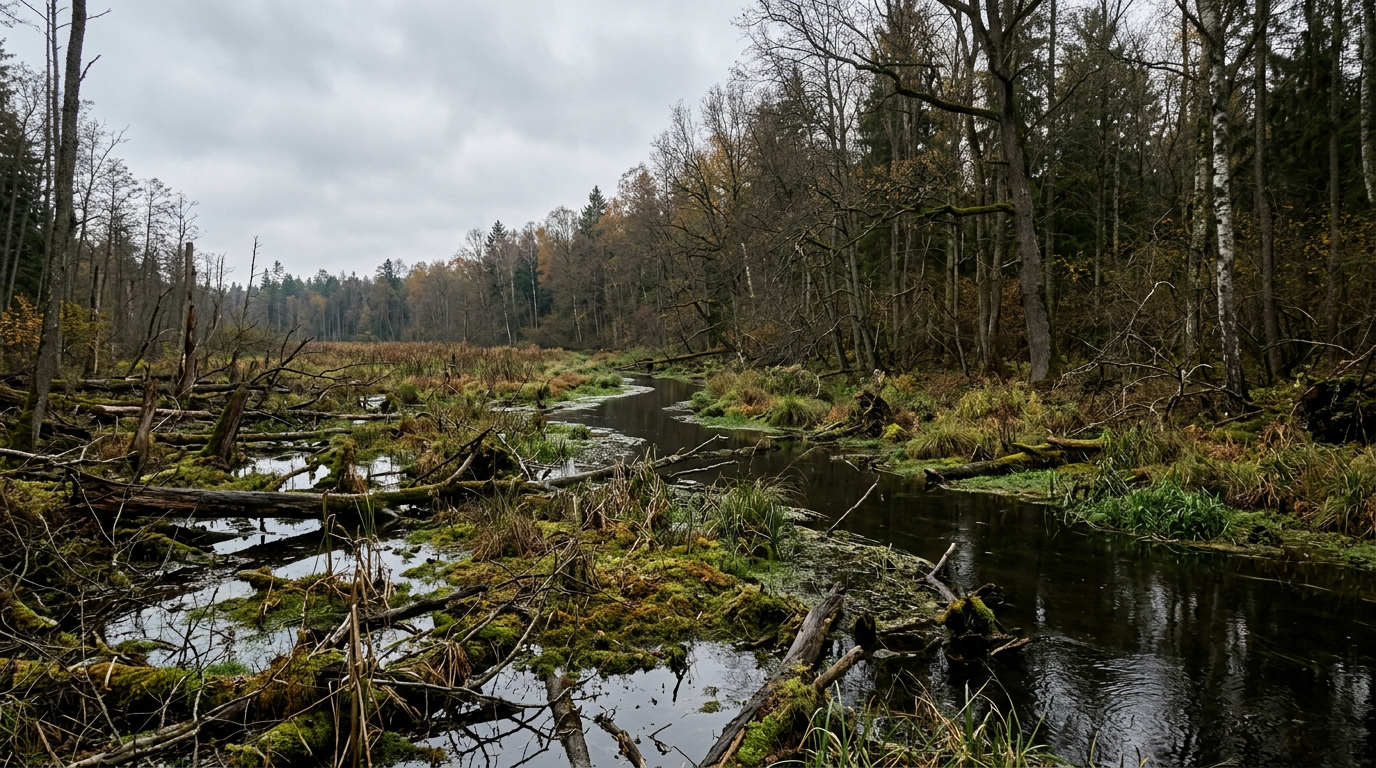

Belgium-sized Amazon wetland area converted as losses accelerate
A Belgium-sized area of the Amazon’s crucial wetlands has now been converted, with annual losses climbing rapidly according to new analysis.
A Belgium-sized Amazon wetland converted in recent years now threatens the ecological balance of one of the planet’s most important freshwater systems. New analysis reveals that vast tracts of floodplain forests, which flood seasonally along the Amazon’s major rivers, have been cleared for agriculture and cattle ranching. These wetlands represent around 30 percent of the Brazilian Amazon and support unique biodiversity as well as traditional riverine communities.
What happened
Every year, Amazonian rivers overflow their banks and inundate surrounding forests for several months, creating dynamic wetlands that sustain complex ecosystems. Riverine families have adapted to this rhythm for generations, building homes on stilts, fishing during high water, and planting crops as floodwaters recede. Yet satellite monitoring now shows that an area roughly the size of Belgium has been permanently converted from these flooded forests into drier, human-modified landscapes.
Loss rates continue to climb despite broader efforts to curb Amazon deforestation. The conversion primarily targets the fertile floodplain zones, which are easier to access by river and offer rich soils for pasture and soy. This transformation disrupts the natural flood pulse that nourishes both wildlife and human livelihoods across the basin.
Why it matters
Biodiversity and carbon impacts
Amazon wetland conversion removes critical habitat for fish, birds, and mammals that depend on the seasonal flooding cycle. Many species use these flooded forests as nurseries or feeding grounds during the wet season. In addition, the loss of wetland trees reduces the region’s capacity to store carbon, potentially accelerating climate feedback loops in the Amazon.
Effects on local communities
Riverine populations that rely on the natural ebb and flow of the rivers for fishing and farming face shrinking resources and changing flood patterns. Traditional knowledge and lifestyles built around the wetlands are increasingly threatened as converted areas no longer support the same abundance of aquatic life or seasonal agriculture.
Connection to wider Amazon protection
While overall Amazon deforestation has shown declines in some periods, the specific acceleration of wetland losses highlights a gap in current conservation strategies. These floodplain ecosystems are often overlooked in standard deforestation alerts because seasonal flooding complicates satellite detection.
What comes next
Experts expect wetland conversion pressures to intensify ahead of COP30 in Brazil, where leaders will discuss forest protection and climate finance. Strengthened monitoring that specifically tracks floodplain forest loss, combined with policies protecting riverine rights, will be essential. Without targeted measures, the climbing rate of conversion could undermine broader gains made in reducing Amazon deforestation overall.
Internal efforts such as Amazon Deforestation Falls 42% to Record Low demonstrate that policy can work, yet wetland-specific safeguards remain underdeveloped. Greater international attention during the upcoming climate summit may help close this gap.
Sources
https://news.mongabay.com/short-article/2026/10/a-belgium-sized-area-of-amazon-wetland-has-been-converted-and-losses-are-climbing/
https://news.mongabay.com/short-article/2026/10/a-belgium-sized-area-of-amazon-wetland-has-been-converted-and-losses-are-climbing/
Frequently asked questions
How large is the converted Amazon wetland area?
An area approximately the size of Belgium, roughly 30,000 square kilometers, has been converted from Amazon floodplain forests.
Why are Amazon wetlands particularly vulnerable?
Their fertile soils and river access make them attractive for agriculture and ranching, while seasonal flooding complicates enforcement of protection rules.
What do riverine communities lose when wetlands are converted?
Traditional fishing grounds, seasonal farming areas, and homes adapted to the flood cycle are all affected as natural wetland functions disappear.
How does wetland loss affect the wider Amazon?
It reduces carbon storage, harms aquatic and terrestrial biodiversity, and can alter local hydrology with consequences for the entire basin.
See more Atmoswire in Google Top Stories
Open the link, sign in to Google and tick the box next to atmoswire.com.
Add Atmoswire as a preferred source on GoogleComments(0)
- No comments yet. Be the first!