
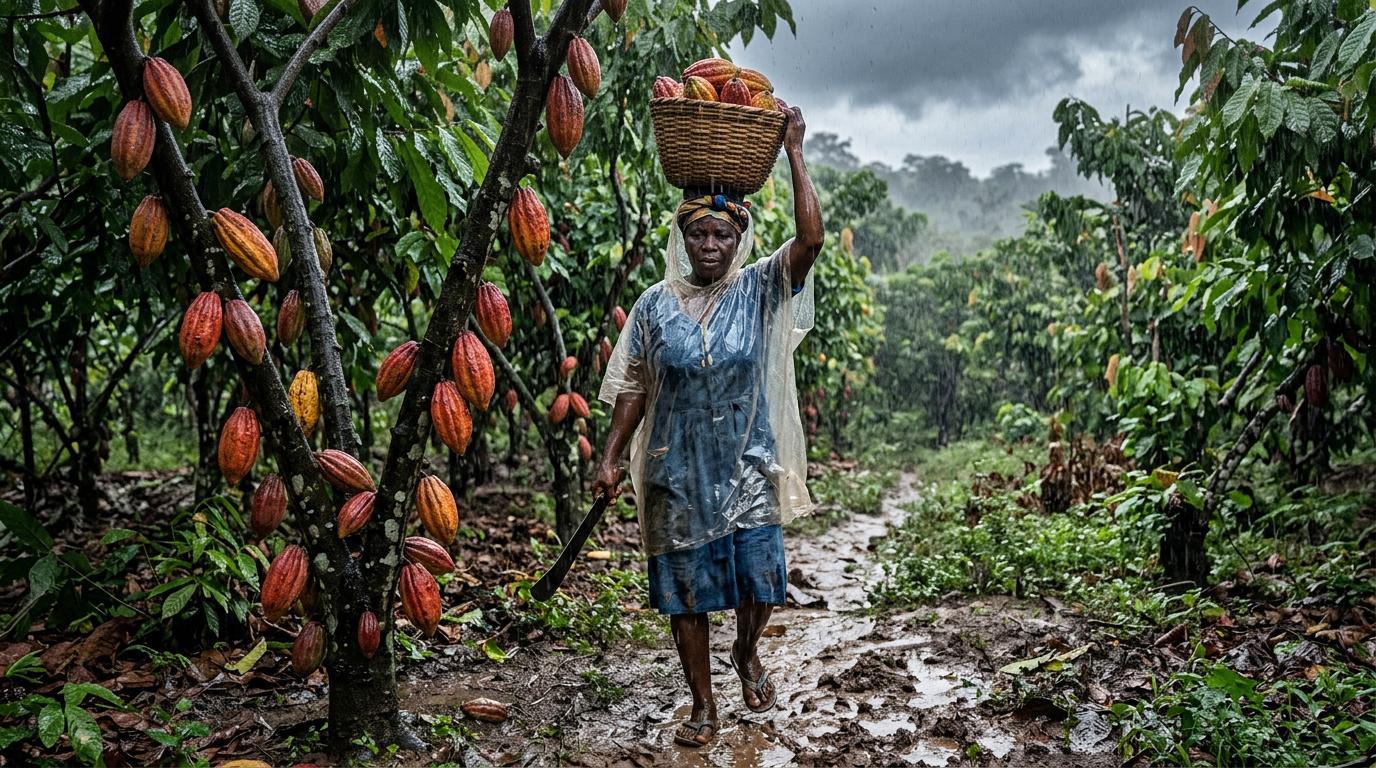
Heavy rains during cacao flowering slash Ghana yields, new study shows
Excessive rainfall during the sensitive flowering and early pod stages has emerged as the primary cause of recent harvest instability in Ghana, the world’s leading cacao producer.
Excessive rainfall during the flowering and early pod development stages has driven significant drops in Ghana’s cacao output, according to new research. Scientists at the Harvard University Center for the Environment identified heavy rainfall in these critical periods as the dominant factor behind recent yield fluctuations in the world’s top cocoa producer. The findings, published in September, highlight how changing precipitation patterns threaten a crop that supports millions of smallholder farmers.
What happened
Researchers examined decades of weather and production data across Ghana’s cacao regions. They found that intense rains during the flowering season disrupt pollination and increase disease pressure on young pods, directly correlating with lower harvests. Years with above-average rainfall in these windows consistently showed reduced yields, even when other factors such as temperature or drought were controlled for.
The study underscores that cacao trees are particularly vulnerable in the weeks after flowers emerge. Heavy downpours can wash away pollen, promote fungal infections, and cause premature flower drop, leading to fewer mature pods. Ghana’s main growing areas have experienced more frequent extreme rain events in recent seasons, aligning with broader regional climate trends.
Why it matters
Impact on farmers and economy
Cacao provides income for roughly 800,000 farming households in Ghana. Yield instability translates into unpredictable earnings, making it harder for families to plan, invest or cope with rising costs. National export revenues also fluctuate, affecting government budgets tied to the cocoa sector.
Climate change connection
The Harvard research adds to evidence that shifting rainfall patterns, driven by climate change, are already affecting tropical agriculture. West Africa’s cocoa belt is expected to face more variable precipitation, intensifying risks for a crop with limited genetic diversity and few drought- or flood-resistant varieties widely available.
Links to biodiversity and land use
Pressure from unstable yields can push farmers to clear more forest for new plantations or apply more chemicals, accelerating habitat loss. This connects to wider conservation challenges across West Africa, where remaining forests support unique species and store carbon.
What comes next
Scientists recommend targeted breeding programs for rain-resistant cacao varieties and improved farm-level water management techniques. Policymakers are urged to integrate these climate risks into national cocoa strategies and support diversification for smallholders. International buyers and certification schemes may need to adjust sustainability criteria to account for weather-driven yield gaps.
With COP30 scheduled in Brazil later this year, campaigners hope cocoa-producing nations will push for stronger adaptation finance. Research teams plan further field trials to test practical interventions that could stabilize production under future climate scenarios.
Sources
https://news.mongabay.com/2026/10/heavy-rains-during-critical-period-of-cacao-cultivation-hit-ghanas-yields/
COP30 in Brazil: The Critical Climate Summit in the Heart of the Amazon
Nearly 90% of countries adopt biodiversity targets but lag on implementation
Frequently asked questions
How does heavy rainfall affect cacao flowering in Ghana?
Heavy rainfall during flowering washes away pollen, damages delicate flowers and promotes fungal diseases on young pods, directly lowering the number of cacao beans produced.
What did the Harvard University study conclude about Ghana cacao yields?
The September study identified excessive rain in the flowering and early pod stages as the main driver of recent harvest fluctuations, more significant than temperature or drought.
Why is cacao particularly vulnerable to changing rainfall patterns?
Cacao trees have a narrow window of sensitivity after flowering; most commercial varieties lack genetic traits for resilience against both excess rain and prolonged dry spells.
What solutions are proposed for Ghana’s cacao farmers facing climate risks?
Recommendations include developing rain-tolerant varieties, improving on-farm drainage, diversifying income sources, and securing adaptation funding through international climate talks.
See more Atmoswire in Google Top Stories
Open the link, sign in to Google and tick the box next to atmoswire.com.
Add Atmoswire as a preferred source on GoogleComments(0)
- No comments yet. Be the first!


